Source Portable Power Generating Diesel Generator for Home, Farm, and Emergency
Find 30 portable power generating diesel generator options with varying power ratings from 10kW to 5000kW. Buyers can compare specifications including cooling methods, startup modes, and customization availability for land use applications.
Key considerations
Products List




Comprehensive Sourcing Guide
Strategic Sourcing Guide for Portable Power Generating Diesel Generators
Understanding Technical Specifications and Core Performance Metrics
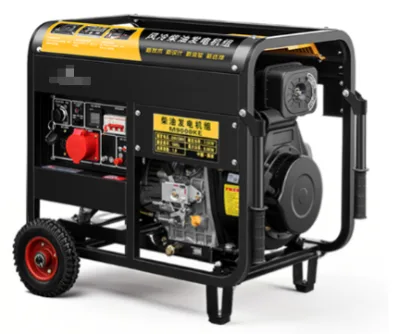
When evaluating portable power generating diesel generators, buyers must first distinguish between the specific technical attributes that define operational capability and those that are merely marketing descriptors. The core of any diesel generator selection lies in the engine configuration and electrical output parameters. Based on available market data, the industry standard for these units often involves a four-stroke engine cycle, which is critical for fuel efficiency and emission control in continuous operation scenarios. The excitation mode is frequently observed as an AC rotating exciter, a configuration that ensures stable voltage output without the need for external power sources for the field winding.
The cooling method is a primary differentiator in portable units. While some heavy-duty stationary models utilize water cooling, portable diesel generators are predominantly air-cooled to reduce weight and maintenance complexity. However, specific high-power variants may employ water cooling systems to manage thermal loads during extended runtime. The installation method is typically fixed for these units, even when marketed as "portable" in the sense of being transportable by truck or trailer, rather than hand-carried. The output type is almost universally AC three-phase, which is essential for industrial applications requiring balanced power distribution, though single-phase options exist for smaller residential loads.
Frequency regulation is another critical specification. The observed market range supports units operating at 50Hz or 60Hz, allowing for global deployment depending on the regional grid standard. Voltage regulation capabilities are a key indicator of power quality; high-performance units demonstrate a voltage regulation of ≤±1%, ensuring sensitive electronic equipment is not damaged by power fluctuations. The rated power for these units spans a vast spectrum, from small 10kW/12kVA models suitable for emergency crews to large-scale industrial units ranging from 50kW up to 5000kW. The rated current correlates directly with this power output, with observed values ranging from 9A for smaller units to 43A for medium-sized generators, and higher currents for the largest industrial models.
Compliance, Certification, and Regulatory Standards
Navigating the compliance landscape for diesel generators requires a rigorous verification process, as the market contains a mix of certified and non-certified products. While specific certification marks like CE are often referenced in background data, buyers must not assume that every listed product automatically possesses these certifications without explicit verification from the supplier. The absence of a specific certification in a product listing should be treated as a gap that requires immediate clarification rather than a standard omission.
Standards compliance is equally critical. The industry often references ISO 8528 for generator performance, but this should be treated as a benchmark for verification rather than a guaranteed attribute of every listing. Buyers should explicitly request test reports that demonstrate compliance with relevant national and international standards for noise, emissions, and electrical safety. The "Low Noise Automation Type" designation observed in some product attributes suggests that noise reduction is a specific design goal for certain models, but the actual decibel levels must be confirmed against local environmental regulations.
Furthermore, the "Conditions of Use" are strictly defined as "Land Use," indicating that these units are not designed for marine or aviation applications. This distinction is vital for procurement officers to ensure the equipment is legally and technically suitable for the intended deployment environment. The "Landuse Type of Unit" often includes automation features, which implies a level of sophistication in the control systems that must be validated against the specific operational requirements of the site.
Cost Drivers and Pricing Structure Analysis
The pricing structure for portable diesel generators is influenced by a complex interplay of factors, including rated power, cooling technology, and automation levels. The observed price range in the market spans from approximately $298.89 to $20,000, reflecting the vast difference between small, basic units and large, fully automated industrial systems. This wide variance indicates that price is not a linear function of power output alone but is heavily dependent on the inclusion of advanced features such as micro-computer control, remote monitoring capabilities, and noise suppression enclosures.
The Minimum Order Quantity (MOQ) is another significant cost driver, with observed ranges spanning from 1 to 100 units. Buyers seeking to procure a single unit for emergency backup may face different per-unit pricing compared to those purchasing in bulk for a fleet deployment. The "Selling Units" attribute often indicates that these are sold as single items, but bulk discounts may be available for larger orders. Additionally, the "Customization" availability allows buyers to tailor specifications, which can impact the final cost. Custom orders typically command a premium over standard models but offer the advantage of precise fit for specific operational needs.
Packaging and logistics also contribute to the total cost of ownership. The use of "Reinforced Plastic Film" for packing is a standard observation, but for international shipping, additional protective measures may be required, especially for units with sensitive electronic controls. The origin of the product, frequently cited as Weifang, China, or Shandong, China, suggests a concentration of manufacturing in these regions, which can influence shipping costs and lead times. Buyers should factor in the total landed cost, including duties and freight, rather than focusing solely on the factory gate price.
Typical Applications and Operational Scenarios
The versatility of portable diesel generators allows them to serve a wide array of applications, from critical emergency backup to routine power generation in remote locations. The "Usage" attributes highlight their suitability for common units, standby units, and emergency crew deployments. This broad applicability means that the same technical specifications may be required for a hospital backup system as for a construction site, necessitating a careful assessment of the specific load profile.
The "Application" list is extensive, covering residential, commercial, and industrial sectors. In residential settings, these units are utilized in garages, basements, and outdoor areas to power essential appliances during outages. Commercial applications include gyms, laundry facilities, and home offices, where uninterrupted power is crucial for business continuity. Industrial uses extend to farms, parks, and courtyards, where generators provide power for irrigation systems, lighting, and security equipment. The "Design Style" being contemporary suggests that modern units are increasingly being designed to blend aesthetically with their surroundings, a factor that may be important for residential or public space installations.
The "Feature" set, including water resistance, durability, anti-corrosion, and fire resistance, further defines the operational envelope. These features are particularly relevant for outdoor installations where exposure to the elements is a constant risk. The "Shape" of the units, which can be round, oval, or square, may influence how they are integrated into specific site layouts or storage facilities. Buyers should match the specific application requirements with the appropriate feature set to ensure long-term reliability and safety.
Supplier Evaluation and Quality Control Protocols
Evaluating suppliers for diesel generators requires a multi-faceted approach that goes beyond simple price comparisons. The "After-sale Service" attributes, such as online technical support, onsite installation, training, and inspection, are critical indicators of supplier reliability. A supplier that offers comprehensive support services is more likely to provide a higher quality product and better long-term value. The availability of free spare parts and return and replacement policies further demonstrates a supplier's confidence in their product quality.
Quality control should be a central part of the procurement process. Buyers should verify the "Material" composition of the generators, which can include brass, plastic, carbon steel, aluminum, and various alloys. The presence of materials like galvanized steel and stainless steel is a positive indicator of corrosion resistance, while the "Non-Alloy" status for some components may indicate a focus on cost-effectiveness over extreme durability. The "Class of Insulation" being H is a standard high-performance rating that suggests the generators can withstand high operating temperatures, a crucial factor for continuous operation.
The "Project Solution Capability" of the supplier is another key evaluation metric. Suppliers that offer graphic design, 3D model design, and total solution capabilities are better equipped to handle complex procurement projects. This holistic approach ensures that the generator is not just a standalone product but part of a cohesive power system. Buyers should also verify the "Warranty" terms, with a standard 1-year warranty being a common baseline. However, for critical applications, buyers may need to negotiate extended warranty periods or service level agreements.
Long-Term Procurement and Lifecycle Management
Long-term procurement considerations for diesel generators extend well beyond the initial purchase. The "Startup Mode" and "Engine Mode" are technical details that impact the ease of operation and maintenance. For instance, a 24V start-up system is standard for many units, but the specific engine model, such as the 186f, dictates the maintenance schedule and parts availability. Buyers should ensure that the supplier has a robust supply chain for spare parts to minimize downtime during the generator's lifecycle.
The "Aspiration" system, whether turbocharged or inter-cooled, affects the efficiency and longevity of the engine. Turbocharged engines generally offer better power density and fuel efficiency, making them suitable for high-load applications. Inter-cooling further enhances performance by reducing intake air temperature, which is beneficial in hot climates. Buyers should assess these features against the specific environmental conditions where the generator will be deployed.
Finally, the "Thickness" of components, often listed as "Custom Products," highlights the importance of tailoring the generator to specific needs. Customization allows for the optimization of the unit's dimensions and weight, which is particularly important for portable applications. Buyers should work closely with suppliers to define these custom parameters early in the procurement process to avoid delays and ensure the final product meets all operational requirements. By focusing on these long-term factors, buyers can secure a reliable power solution that delivers value over the entire lifespan of the equipment.
FAQs
What is the rated power range for these generators?
Rated power ranges from 10kW to 5000kW depending on the specific model selected. Smaller units like the Al-PT2V10 offer 10kW, while larger industrial variants support up to 5000kW for heavy-duty applications.
Can I customize the specifications for my project?
Yes, customization is available for these diesel generators to meet specific operational needs. Buyers can request tailored features such as specific cooling methods or control systems to fit their unique requirements.
Which cooling methods are used for these units?
Both air-cooled and water-cooled methods are observed in the product listings. Air cooling is common for portable units, while water cooling is utilized in specific high-power variants to manage thermal loads effectively.
How is the voltage regulation performance defined?
High-performance units demonstrate a voltage regulation of less than or equal to plus or minus 1 percent. This ensures stable power output suitable for sensitive electronic equipment without damage from fluctuations.
What warranty terms are typically provided by suppliers?
A standard one-year warranty is commonly offered for these portable power generating diesel generators. This coverage ensures basic protection against defects, though extended terms may be negotiated for critical applications.
Where are these generators primarily manufactured?
The primary places of origin are Weifang and Shandong in China. These regions concentrate manufacturing capabilities, influencing shipping logistics and the overall cost structure for international buyers.
What after-sale services do suppliers typically offer?
Suppliers provide online technical support, onsite installation, training, and inspection services. Additional benefits often include free spare parts and return and replacement policies to ensure long-term operational reliability.